Pink vs Red Heart Emoji — What’s Actually the Difference?
You’ve definitely sent the wrong heart at some point. Maybe you meant “I care about you as a friend” and accidentally sent something that read like a marriage proposal. Or the other way around — you were feeling things and sent something that read like a friendly pat on the shoulder. We need to fix this. Right now.
⏱ 9 min read
💗 Pink heart explained
❤️ Red heart decoded
🎯 Scenarios included
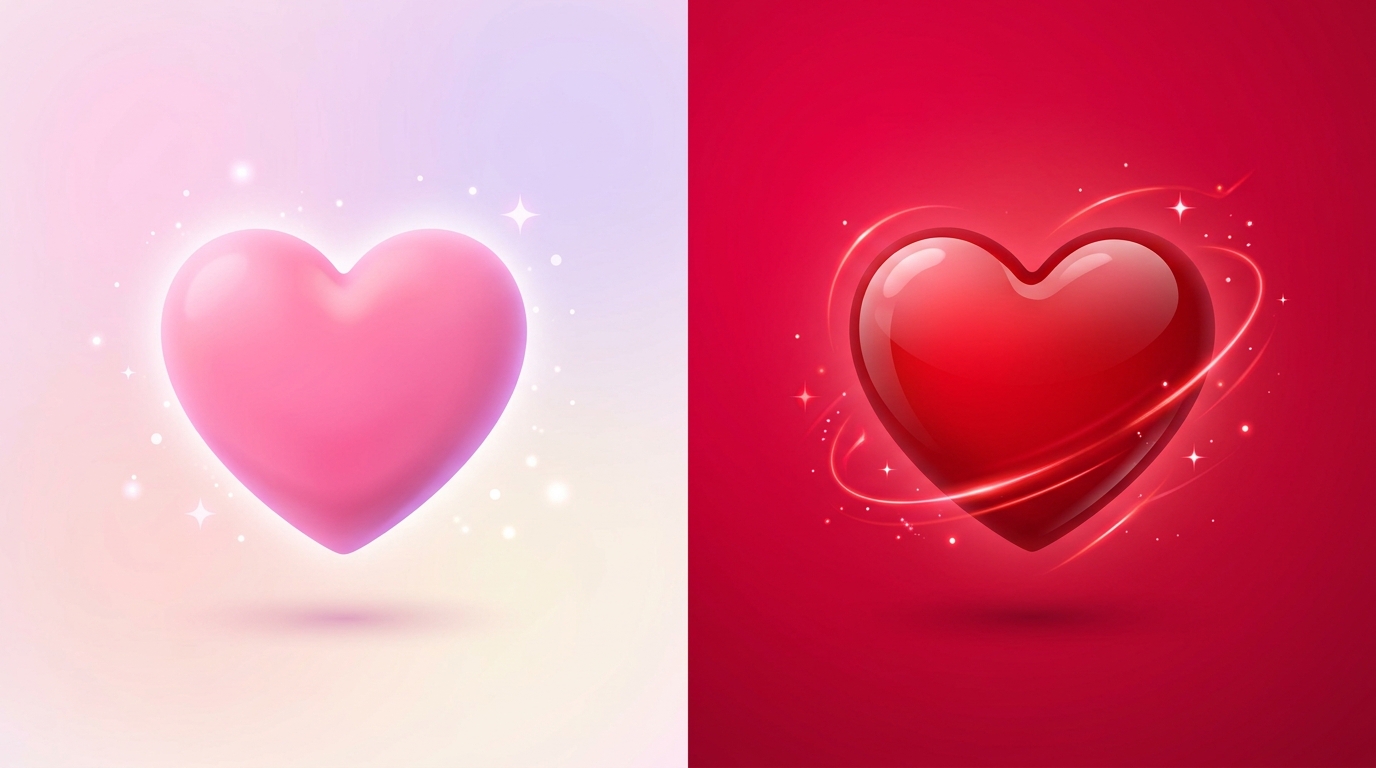
The red heart ❤️ is bold, serious, and romantically loaded — it says “I love you” or “you matter deeply to me” with real weight behind it. The pink heart 💗 is softer, warmer, and more flexible — it says “I genuinely care about you” in a way that fits friends, family, and crushes alike. Same shape. Completely different energy. Context is everything — but colour does a lot of the heavy lifting.
Let’s be real. Nobody sat you down and taught you heart emoji etiquette. You just started using them and hoped for the best. And for the most part, that works fine — until the day you send ❤️ to your situationship and they go quiet for three days. Or you send 💗 to someone you’re deeply in love with and they say “aww, thanks bestie.” Bestie. That’s the sound of being friend-zoned by a person who genuinely cares about you but read your emoji wrong.
The difference between pink and red is subtle on screen. In actual conversation, it’s the difference between “I like you” and “I’m in love with you.” So let’s break it down properly — no fluff, no overthinking, just the real answer.
1 The Core Difference — Side by Side
Before we go deep, here’s the most honest summary you’ll find anywhere:
Soft, warm, personal. Affection that’s growing — feels genuine and close without being heavy. The friend-who-actually-means-it emoji. Flexible enough to work in almost any close relationship.
Bold, deep, romantic. The OG of love emojis. It carries actual emotional commitment behind it. In a personal message, this isn’t casual — it means something real and the person who receives it feels that.
Think of it this way. If 💗 is the warm hug of the emoji world, ❤️ is the “I have feelings for you” confession. Both are sincere. Both are lovely. They just live at completely different emotional temperatures.
2 What Is the Pink Heart Emoji 💗?
The pink heart — officially called the “Growing Heart” — is the most emotionally versatile heart in the set. That little size gradient built into the emoji isn’t just decorative. It literally means the feeling is expanding. Getting bigger. It’s warmth that’s alive, not static.
Personality-wise, 💗 is the emotionally intelligent friend who remembers your birthday, checks in when you’re going through something, and makes you feel genuinely cared for. It doesn’t scream. It doesn’t declare. It just shows up, warm and real.
It works for your best friend, your sister, your mom, your situationship, your crush, and sometimes even your favourite content creator. That’s not a flaw — that’s the point. It communicates sincere warmth without attaching a label to it. Context decides the rest.
✅ Good for:
- Checking in on a close friend who’s been struggling
- Telling a family member you love them without the heavy ❤️ energy
- Responding to a crush’s message when you like them but aren’t declaring anything yet
❌ Bad for:
- Proposing to someone (please use ❤️ or, you know, actual words)
- Sending to a colleague in a formal context where it might read as inappropriately personal
Where Pink Heart Lives on the Internet
On WhatsApp, 💗 is deeply personal — it transforms any message into something that lands with warmth. On Instagram it’s lighter — a way of saying “I love this” or “I love you, creator.” On TikTok it shows up in the comments of emotional videos as collective warmth, almost like a digital “same.” Each platform gives it slightly different weight, but the core stays the same: genuine, growing care.
3 What Is the Red Heart Emoji ❤️?
The red heart is the original. The classic. It has been the universal symbol of love since before smartphones existed, since before the internet existed. When someone reaches for ❤️ in a personal message, they are pulling from centuries of meaning. That weight is real and the person receiving it feels it.
Personality-wise, ❤️ is the one who says “I love you” first. It doesn’t do ambiguity. It doesn’t do “let’s see where this goes.” It’s all in. Committed. The red heart has decided, and it would like you to know.
Between long-term partners, ❤️ is everyday language — comfortable, warm, theirs. Between two people figuring out their feelings, it’s a statement. Between good friends, it can work — but it reads slightly heavier than pink. That’s not bad. It just means more.
✅ Good for:
- Telling a romantic partner you love them on a regular Tuesday
- Sending to a parent, sibling, or lifelong best friend who you have zero ambiguity with
- Responding to genuinely meaningful news or a heartfelt message
❌ Bad for:
- Sending to a new friend you’ve known for three weeks — it reads heavier than you intend
- Casual social media comments where it can come across as oddly intense
4 Full Comparison — Pink vs Red
Let’s put them side by side and stop guessing:
| Category | 💗 Pink Heart | ❤️ Red Heart |
|---|---|---|
| Official name | Growing Heart | Heavy Black Heart (now Red Heart) |
| Emotional weight | Moderate — warm but flexible | Heavy — sincere and committed |
| Romantic or friendly? | Both — context decides | Leans romantic in personal chats |
| Best for friends | ✅ Perfect | Works, but reads deeper |
| Best for crushes | ✅ Great — soft signal | ✅ Strong — clear signal |
| Best for partners | Works — but pink is softer | ✅ Classic choice |
| Instagram comments | ✅ Common and natural | Works but reads more intense |
| TikTok comments | ✅ Very common, collective warmth | Less common, more personal |
| Can it be misread? | Yes — between friendly and romantic | Less — it almost always reads serious |
| Sends the message “I love you” | Sometimes — context dependent | Almost always — yes |
5 Real Scenarios — Which One to Send?
Stop overthinking and use this. Every scenario has a verdict.
❤️ Also works
💗 Also totally fine
❤️ Works too
6 Chat Examples: The Difference in Action
Same person. Same situation. Different emoji. Watch how the whole vibe shifts.
The Pink Version — Warm but Flexible
This conversation could be two close friends — or two people who like each other. Both readings work. The pink hearts make it personal and warm without locking in a label. That’s 💗 doing exactly what it’s designed to do.
The Red Version — This Lands Differently
Now read that again. Same words. The red hearts make this feel like something is being said. There’s weight here. Sincerity, yes — but also something deeper being communicated. If you felt something different reading that second chat, that’s the red heart at work.
The Wrong One — A Cautionary Tale
Outcomes: one of these messages might accidentally kick off a whole conversation. The other just sends them into the interview feeling supported. Know which one you’re sending.
7 The Psychology Behind Picking a Colour
Here’s what’s actually happening in your brain when you pause between 💗 and ❤️ before sending. You’re running a quick calculation without realising it. You’re asking: How much do I want to show right now? How much weight does this moment deserve? And how will they read it?
Red is associated psychologically with intensity, urgency, and passionate emotion. It demands attention. It has biological roots — red triggers alertness. When someone sees ❤️ in a personal message, their brain processes it as significant. That’s not superstition. That’s hardwired.
Pink sits in the emotional middle ground. It signals warmth, care, and gentleness without the same urgency. Studies in colour psychology consistently show pink as associated with nurturing and soft emotional connection — the kind that comforts rather than excites. When you send 💗, you’re tapping into that frequency.
The growing heart design of 💗 is also emotionally intelligent. It signals something expanding rather than something fixed. It’s not “I love you, finalized.” It’s “this is growing.” That’s a very different emotional statement — and it’s why the pink heart works so well in situations where feelings are developing but haven’t been declared.
The red heart makes a claim. The pink heart makes a space. Both are valuable. Both are honest. You just need to know which one matches where you actually are.
Want to Go Deeper on Heart Emoji Meanings?
Explore every heart emoji — what it means, when to use it, and how to never send the wrong one again.
8 Frequently Asked Questions
Context Decides. Colour Signals. You Choose.
At the end of the day, no emoji has a fixed meaning tattooed on it. The red heart means what the conversation around it says it means. So does the pink one. But colour does carry emotional information — information that lands before your brain consciously processes it. So choose deliberately. Know the difference between warmth and declaration. Know when you want to create space and when you want to take it up. And for the love of all things, double-check which heart you’re sending before you tap send.
→ Keep Reading